Digital Marketing
11 min read

What is Query Fan-Out? A Simple SEO Guide for Law Firms

Overview

If you’ve ever written a blog post, news article, or service page and wondered why it doesn’t attract as much traffic as you hoped, you’re not alone. The problem often isn’t your writing, it’s often how niche and narrow your article might be, especially when it comes to Law Firm SEO or other specialist content. That’s where a simple idea called “Query Fan-Out” comes in.

Don’t worry, this isn’t another bit of SEO jargon. “Query Fan-Out” is just a practical way of making sure your article covers everything people might search for around a topic, not just one phrase which is a crucial skill for effective Law Firm Search Engine Optimisation. When you use this approach, you can reach a wider audience without stuffing your page full of keywords.

Now is the time to level up your law firm SEO. Let’s break it down step by step.

What does “Query Fan-Out” mean?

In plain English, “Query Fan-Out” means branching out from one main search query into several related ones.

For example, if your main idea is “how do I change a tyre?”, people might also search for:

  • “how long does it take to change a tyre?”
  • “can I change a tyre without tools?”
  • “how much does it cost to change a tyre?”
  • “how do I change tyre safely at home?”

All those searches are variations of the same theme. If your article includes short, clear sections that touch on each of them, it’s more likely to appear in search results for all of them, not just one. That’s “fan-out” in action.
Why does Query Fan-Out matter for your content?

Search engines like Google try to match pages with what people actually want to know. That’s particularly important in Law Firm SEO, where clients search for legal advice and services in many different ways. If your article only answers one narrow question, it might miss out on dozens of similar searches.

By using a fan-out approach:

  • You cover more ground without repeating yourself. For Law Firm Search Engine Optimisation, this approach means reaching potential clients searching different legal terms.
  • You make your content more useful for readers.
  • You increase your visibility for a variety of search terms.

It’s not about guessing what people might type into Google. It’s about thinking more broadly about how your audience might ask the same question in different ways, or what question they might ask next.

Step-by-step guide on how to apply “Query Fan-Out” to your next article

Here’s how to do it, even if you’ve never touched an SEO tool in your life.

Step 1: Start with your main topic

Write down the main idea you’re covering. For example:

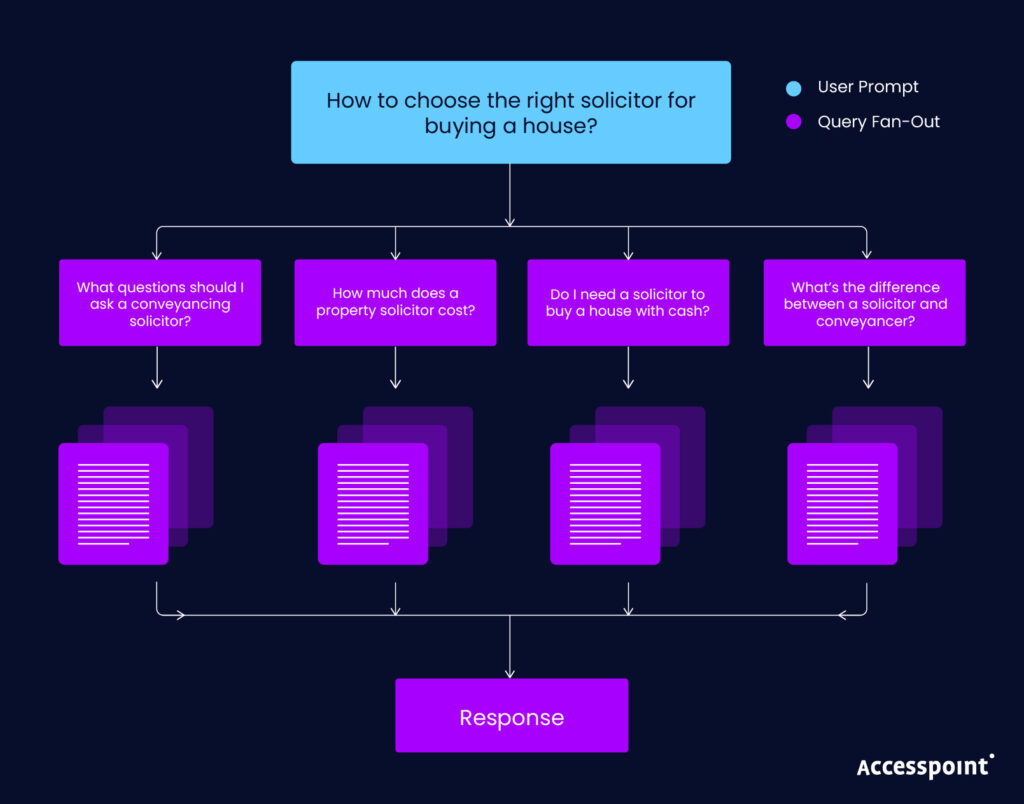
“How to choose the right solicitor for buying a house.”

That’s your core query. The starting point for your fan-out, and it’s a great starting point for Law Firm SEO content.

Step 2: Think about what else people might ask

Imagine you’re the reader. What other questions might you type into Google when researching that same topic?

You might come up with things like:

  • “What questions should I ask a conveyancing solicitor?”
  • “How much does a property solicitor cost?”
  • “Do I need a solicitor to buy a house with cash?”
  • “What’s the difference between a solicitor and conveyancer?”

Each of these is a branch of your main query.

Step 3: Use free, simple tools to find real examples

You don’t need fancy software to expand your fan-out. Here are a few easy ways to discover related queries:

  • Google’s “People Also Ask” boxes – Type your topic into Google and note the questions that appear in this box.
  • Related searches at the bottom of Google results – These are real searches people make.
  • Autocomplete suggestions – Start typing your phrase into Google and look at what pops up.
  • AnswerThePublic (free version) – Type your keyword and see a visual web of related questions.

Jot down 5–10 variations that feel most relevant to your audience. These tools are particularly helpful for planning Law Firm Search Engine Optimisation content, where phrasing can vary widely.

Step 4: Group your ideas into sections

Don’t try to cram every query into one long block of text. Instead, use headings to group related questions.

For example, your article could look like this:

  1. How do I Choose the Right Solicitor for Buying a House?
  2. What Questions Should I Ask Before Hiring a Solicitor?
  3. How Much Does a Property Solicitor Cost?
  4. Do I Need a Solicitor for a Cash Purchase?
  5. Conveyancer vs. Solicitor – What’s the Difference?

This approach makes your writing easier to read and it helps search engines understand what your page is about and it boosts your Law Firm SEO by helping search engines clearly understand each topic’s intent.

Step 5: Answer each question briefly and clearly

Each section doesn’t have to be long. A few clear sentences or a short paragraph per question is enough. The key is to answer the query directly, using plain language.

For instance, for the question “Conveyancer vs. Solicitor – What’s the Difference?” the succinct answer might be:

“A conveyancer handles property transactions, while a solicitor can offer a wider range of legal services. For straightforward purchases, a conveyancer is usually fine, but if your sale involves complex legal issues, a solicitor may be better.”

That’s one neat paragraph that answers a specific search query. Job done.

Step 6: Add natural variations of your main keyword

When writing, it’s fine to use natural variations of your key phrase like “property lawyer,” “conveyancing solicitor,” or “legal advice for homebuyers.”

This isn’t keyword stuffing. It’s just using the same idea in different ways, so your content matches how people really search. This principle is the same in Law Firm SEO, where using natural variations like ‘family lawyer’, ‘divorce solicitor’, or ‘legal advice for clients’ improves reach.

Step 7: Review your “fan-out” coverage

Before publishing, skim through your article and ask yourself:

  • Have I covered a range of related questions?
  • Does each section clearly answer something a reader might search for in Google?
  • Have I avoided repeating myself or overusing one phrase?

If the answer is yes, you’ve successfully created a piece of content that fans out naturally and all without needing to be an SEO expert.

Law Firm SEO

Pillar and Cluster content for SEO: What it is and why it matters

Whether you’re a legal professional, small business owner, or marketing manager, understanding and implementing this model can have a transformative impact on your organic traffic. Find out how to build E-E-A-T through Pillar and Cluster content by reading Rich‘s recent blog.

Law Firm SEO and Query Fan-Out – Key takeaways

You don’t need to be an SEO professional to benefit from Query Fan-Out. All it takes is curiosity about your audience’s questions.

Remember:

  • Start with one main topic.
  • Brainstorm related questions.
  • Use Google suggestions for inspiration.
  • Organise your content into helpful sections.
  • Write simple, clear answers.

By following these steps, you’ll naturally create articles that rank for more searches, attract more readers, and feel more useful and all without diving into SEO jargon.

In short: Query Fan-Out is just smart, thoughtful writing that recognises your readers have more than one question. The broader (yet focused) your answers, the wider your reach.

When it makes sense to bring in an SEO specialist

If you’re writing legal content, this is where professional support in Law Firm Search Engine Optimisation can make a measurable difference. While Query Fan-Out is something you can do yourself, there are real benefits to recruiting an SEO professional, especially if you want to take your content to the next level.

Here’s what an SEO specialist can add:

  • Data-driven insights: They can identify exactly which queries have the most search volume and which ones your competitors rank for, saving you the guesswork.
  • Content strategy planning: An SEO professional can help you map out a content plan that ensures each page complements the others, improving your site’s overall authority.
  • Technical optimisation: Beyond writing, SEO includes technical tasks like improving page speed, using structured data, and optimising meta tags. These are things that directly affect rankings but aren’t obvious to most writers.
  • Monitoring and adaptation: SEO isn’t a one-time job. Specialists track performance, tweak content, and ensure your articles continue to reach new readers over time.
  • Maximising ROI: By combining your expertise with their SEO knowledge, you get articles that are both useful to readers and highly discoverable online.

In short, learning basic strategies like Query Fan-Out can help you write better content today, but pairing your efforts with an SEO expert ensures your work reaches its full potential. When applied consistently, Law Firm SEO strategies like Query Fan-Out can transform visibility and client engagement online.

Contact Rich today – Our Law Firm SEO Expert

If you want to chat about anything in this blog or you want to discuss your law firm SEO and how Accesspoint can help, then email me today. And don’t forget to check out our client case studies below!


Digital Marketing
13 min read

How to optimise your content for AI Overviews

Overview

For businesses and professionals who rely on organic search traffic, this shift matters enormously. It’s no longer enough to rank in the “ten blue links”, you now need to think about how your content is presented to, and interpreted by, AI systems.

In this article, we’ll explore:

  • Why AI Overviews matter
  • How they affect visibility and clicks
  • Simple, actionable ways to optimise your content

Why Does Optimising for AI Overviews Matter?

AI Overviews usually* appear above traditional search results. This means that if your content is referenced or quoted in the overview, it can reach users before they scroll down to the standard listings.

Did you know? According to research summarised in an article on Search Engine Land“Three-quarters of the links cited in Google AI Overview appear in position 12 or higher in the organic search results.”. What we can take from this is that traditional SEO, i.e. optimising for organic SERP placement, seems to be a contributing factor in whether you are cited in the AIO or not.

If Google’s AI chooses your page as a source, it’s a signal that your content is authoritative, reliable, and well-structured. This can strengthen your reputation in your field.

Some users may get the information they need directly from the AI Overview without clicking through to a website. While this user behaviour can reduce traffic to your website, being cited in an AI Overview still raises your brand awareness, especially if your company name or website site appears within the overview.

Did you know? In a recent Search Engine Journal article it is stated that “Google’s AI Overviews now appear for over 11% of all searches according to BrightEdge research, pulling information from multiple sources to create comprehensive answers above your organic results. Users get what they need without clicking through.”.

Search seems to be moving towards AI-powered discovery so optimising your content NOW helps ensure your content doesn’t get left behind.

How AI Overviews Work (Simply Explained)

AI Overviews are generated by large language models (LLM) which are trained on vast amounts of text. When someone searches, the AI scans Google’s index and picks content that looks:

  • Clear and easy to summarise
  • Accurate and up to date
  • Structured logically with headings and lists

Google then produces a “synthetic answer”, but it often links to the pages where it drew the information from. Your goal is to make your content the obvious choice for the AI to cite.

Practical Steps to Optimise Your Content

Here are some straightforward actions that non-specialists can take to improve their chances of being featured in AI Overviews:

  • Adopt the ‘answer first’ principle and place the answer to the question (the primary question which your web page is addressing) right at the top of your article or section.
  • Keep sentences short and easy to understand.
  • Imagine you’re writing for someone with only 30 seconds to spare.

For example: Instead of burying the answer “Section 21 is a legal process landlords use to evict tenants without fault” in paragraph four, open with that sentence and lead with the question “What is a Section 21 notice?”.

  • Break up your content into bite-sized chunks using clear headings (H2, H3, H4 etc) that reflect common search queries.
  • Use bullet points and numbered lists where possible – AI loves structured data it can quickly summarise.
  • Add short summaries at the end of long sections.

People ask Google questions in a conversational way, like “How do I optimise for AI Overviews?” rather than “AI Overview optimisation.”

  • Sprinkle in FAQ-style questions as subheadings.
  • Answer them directly underneath in one or two sentences.

Google values E-E-A-T (Experience, Expertise, Authoritativeness, Trustworthiness).

  • Add an author bio at the end of your post and be sure to link from the post to their profile and/or other articles they may have written and published.
  • Link to reputable external sources where appropriate. They key here is to only link to reputable external sources so choose wisely.
  • Keep your content up to date – review and refresh articles regularly.

Pillar and Cluster content for SEO: What it is and why it matters

Whether you’re a legal professional, small business owner, or marketing manager, understanding and implementing this model can have a transformative impact on your organic traffic. Find out how to build E-E-A-T through Pillar and Cluster content by reading Rich‘s recent blog.

Traditional Law Firm SEO focuses on keywords, and whilst we are still focussed on ranking in the organic search results, AI Overviews favour well-explained, natural language.

  • Write like you’re explaining to a client or colleague, not just ticking boxes for search engines.
  • Avoid jargon unless your specific audience expects it. Try to stay away from using acronyms or abbreviations or use them sparingly along with the long version.

AI looks for useful, instructional content – material that goes beyond theory and actually helps the reader take action. If your article contains real-life examples, step-by-step advice, or clear takeaways, it’s much more likely to be cited in an AI Overview.

Google AI wants to serve up answers that are not only correct but also actionable. A list of abstract tips is less appealing than a clear, guided process and checklist.

For example, if you’re writing about “how can landlords serve a Section 21 notice,” you could:

  • Provide a step-by-step checklist of the documents required.
  • Show a short scenario of how a landlord might use the process in practice.
  • Highlight common mistakes to avoid, alongside best practice.

This kind of content signals to Google’s AI that your page offers practical value. It also helps real readers, who are more likely to stay on your page, share it, or remember your brand when they need professional support.

Even great content won’t be used if your site is hard to crawl.

  • Check that your pages load quickly.
  • Make sure your content is mobile-friendly.
  • Use a clear URL structure and add internal links between related posts.

For this technical element, you may need to employ the services of a specialist. However, non-specialists can get started using free tools:

  1. Google PageSpeed Insights – Provides real-time insights on page speed, mobile responsiveness, and optimisation suggestions.
  2. Ahrefs Webmaster Tools – Identifies technical SEO issues like broken links, indexing problems, and overall site health.
  3. SEO SiteCheckup – Offers a simple site audit, including checks for meta tags, headings, broken links, and other common technical SEO issues.

Using these tools, you can quickly spot problems and prioritise fixes, even without a technical background. Regular checks help ensure your content remains accessible, crawlable, and AI-ready.

Quick Checklist for AI Overview Optimisation

Using the above as an essential guide for when you are publishing new content or optimising existing content will stand you in good stead for ranking high and featuring in the AI Overviews.

To help you further, and to simplify your journey, below is a list of actions you should check off each time you write or edit website content.

Print this out and pin it up so that you can quicky refer to it every time you create or edit content.

SEO Checklist - Checklist items for writing a blog or an article.

Our Final Thoughts (and a bit about funnels)

AI Overviews are still evolving, but we think they are here to stay. Optimising for AI Overviews is about making your content more useful, clear, and authoritative for real people.

If you can answer questions concisely, structure your writing logically, and demonstrate genuine expertise, you’ll increase your chances of being highlighted by Google’s AI.

Even if AI Overviews sometimes reduce click-through rates, there’s a powerful upside: brand visibility at the very top of the search journey, also known as the Top of the Funnel (TOFU). When your content is cited in an AI Overview, your company name or website appears as a trusted source right at the start of a user’s research process.

That exposure helps you:

  • Build brand awareness with audiences who may not yet know you.
  • Establish authority by being positioned as a source Google’s AI relies on.
  • Nurture future demand – users may not click today, but they’re more likely to remember and return when they need more information, professional support, or to buy a product or service.

In other words, being cited in an AI Overview isn’t only about traffic, it’s about getting your brand in front of potential clients earlier, increasing the chances they’ll choose you when they’re ready to take action.

Optimising for AI Overviews is not an optional extra. It’s a shift in how information is discovered online. By following these simple, practical steps now, you can ensure your content continues to be found, trusted, and read – even as search transforms.

Contact Rich today – Our Law Firm SEO Expert

If you want to chat about anything in this blog or you want to discuss your law firm SEO and how Accesspoint can help, then email me today. And don’t forget to check out our client case studies below!

Digital Marketing
11 min read

Pillar and Cluster content for SEO: what it is and why it matters

Overview

If you’ve ever found yourself writing multiple blog posts around a given topic but you struggle to see real SEO results, you’re not alone. One of the most effective ways to structure your website content for both users and search engines is the Pillar and Cluster model. It’s a strategic, scalable approach to publishing new content and managing existing content that improves visibility, builds authority, and aligns closely with Google’s emphasis on E-E-A-T – That’s Experience, Expertise, Authoritativeness, and Trustworthiness. 

Whether you’re a legal professional, small business owner, or marketing manager, understanding and implementing this model can have a transformative impact on your organic traffic. 

Not sure even what SEO is? Check out my recent article where I cover briefly what SEO is, but expand further on how you can write a great blog that gets seen! 

What is Pillar and Cluster content? 

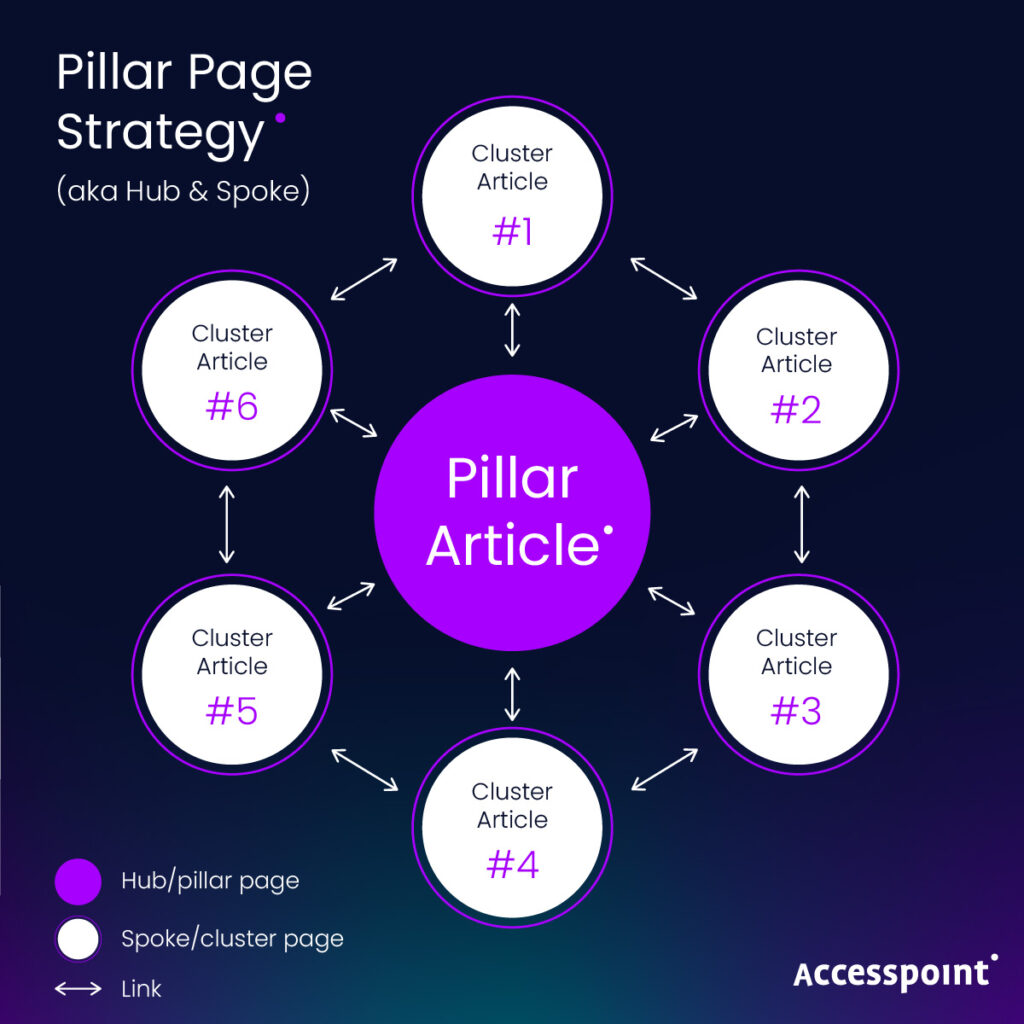
Think of your website as a book, where each core topic is a chapter and each supporting detail is a sub-section. That’s essentially what Pillar and Cluster content does for Law Firm SEO

  • Pillar Content is a comprehensive, evergreen page that broadly covers a core topic. It’s usually longer-form, offering an overview of what we might call a parent topic and answers the main questions users might have. 
  • Cluster Content consists of more focused articles that explore sub-topics in fine detail. Each of these cluster posts links back to the pillar page – and ideally, the pillar links back to them too. 

For example: 

  • Pillar: “The Complete Guide to Separation and Divorce” 
  • Clusters: “How Divorce Proceedings Work”, “Parental Responsibility Explained”, “Financial Orders After Separation”, etc. 

The beauty lies in the internal linking structure. This signals to Google that all this content is thematically connected and well-organised. Like a neatly filed cabinet instead of a messy drawer. 

Why is the  Pillar and Cluster model so valuable for SEO? 

The Pillar and Cluster model isn’t just a tidy way of organising your blog. It offers concrete Law Firm SEO benefits: 

1. Improves topical authority 

By covering a topic comprehensively, your site signals to search engines that you’re a subject matter authority – an expert! When Google sees multiple high-quality, interlinked pages around a core topic, it understands that your website is a hub of expertise. The result: it is more likely to rank well for related searches. 

2. Boosts keyword rankings 

Rather than targeting one keyword per post, this model allows you to target multiple related keywords across different posts, capturing more of the search market. You rank for a wider spread of queries while reinforcing a central topic. 

3. Enhances user experience 

Users are more likely to stay on your site when they find a clear path through your content. This means better engagement, more pageviews, and lower bounce rates. These are all really positive signals that can support SEO performance. 

4. Internal linking benefits 

Strategic internal links improve crawlability, distribute link equity, and help users discover related content. This often leads to faster indexing and more meaningful visibility in search results. 

How it supports E-E-A-T 

E-E-A-T stands for: 

  • Experience: This refers to first-hand or life experience in the subject matter. Content that reflects direct, lived experience – such as a solicitor describing their role in a complex conveyancing case – is often more insightful and relatable. Google values content that feels authentic and grounded in real-life practice. 
  • Expertise: This involves the formal knowledge or training behind the content. Are the authors qualified? Do they have the credentials or professional background to speak on the topic? For example, a blog on legal rights authored by a practising solicitor carries significantly more weight than one written by a generalist. 
  • Authoritativeness: This is about reputation — both of the individual and the website. Has the author or site been referenced or cited by others? Are they recognised within their industry? If your site consistently covers legal topics in-depth and is known for it, that bolsters its authority in the eyes of search engines. 
  • Trustworthiness: This focuses on whether the site and content can be relied on. Is the content accurate, well-referenced, and transparent about its sources? Trustworthiness also improves when you include things like editorial policies, contact information, and clear authorship. 

Google doesn’t explicitly “score” E-E-A-T, but it does reward the kind of content and structure that support it. According to Google’s Search Quality Evaluator Guidelines (2023), high-quality content demonstrates experience, expertise, authoritativeness, and trustworthiness, especially for what Google calls “Your Money or Your Life” topics like legal and health content. 

Here’s how Pillar and Cluster content aligns: 

Experience 

Cluster content gives authors a chance to showcase real-world involvement. For instance, a solicitor might share direct examples from client work, lessons learned from recent case outcomes, or commentary on changes to the law they’ve implemented in practice. This authentic, first-hand perspective helps content stand out – not only in tone but in Google’s eyes too. 

Expertise 

Expertise stems from formal education, qualifications, and domain knowledge. Through cluster posts, you can cite legislation, explain procedural steps, or debunk myths with professional clarity. By anchoring each of these in a well-researched pillar page, you demonstrate not just occasional insight but structured, consistent subject-matter mastery – a key signal for Google’s ranking systems. 

Authoritativeness 

Sites that cover topics in breadth and depth, and are structured coherently, signal authority. Think of it from the user’s perspective: who are they more likely to trust — a site with one random article on employment law, or one with a full section, clearly connected, covering every nuance of the topic? 

Trustworthiness 

The internal structure of pillar and cluster content helps reduce bounce rates and increase engagement – both are great signals to Google of good quality content. When paired with author bios, cited sources, and clear disclosure, this structure builds a genuinely trustworthy user experience. 

How do I build a Pillar and Cluster strategy? 

Here’s a step-by-step guide for implementing this model. The best part? You don’t need any technical knowledge to get started. 

1. Choose a core topic (Pillar) 

Start with a subject that’s central to your business and has enough depth to support sub-topics. This could be something rather broad like “Residential Property Law: Buying a property in the UK”. 

Your pillar should give a high-level overview of the topic, ideally targeting a high-volume but competitive keyword. 

2. Map out supporting Clusters 

Use keyword research tools (like SEMrush, Ahrefs, or even Google’s “People also ask”) to identify specific questions or themes within your pillar. Each of these should become its own post: 

  • “A First-Time Buyers Guide to Buying Your First Home” 
  • “In-Depth: What are property searches and enquiries when buying a property?” 
  • “A day in the life of a Conveyancing Solicitor” 

3. Interlink thoughtfully 

Link from the pillar to the clusters and from clusters back to the pillar. This creates a strong internal linking network that’s easy for search engines and users to follow. 

4. Refresh and expand regularly 

Google loves fresh, relevant content. As your pillar gains traction, keep adding new clusters to respond to changes in the law, new client queries, or search trends. Plus, remember to revisit your existing content to ensure it’s still relevant and to make small updates that help it remain current. 

Final thoughts 

The Pillar and Cluster approach is more than a content strategy. It’s a commitment to providing clarity, relevance, and depth in your blogs – the very qualities that align with how Google evaluates and ranks your content. It should empower you to demonstrate your authority on a given topic, strive to meet the needs of the user, and to build and future-proof your SEO strategy. 

For non-SEO professionals, this is a real practical way to bring order to your content marketing efforts. And for SEO specialists, it’s a powerful tool to scale performance without sacrificing quality. 

If you’re serious about organic growth, then pillar and cluster content isn’t just a nice to have, it’s essential. For more information on why Law Firm SEO is essential (and why you should give SEO its due attention from day one) then check out my recent article: SEO not SOS.

Contact Rich today – Our Law Firm SEO Expert

If you want to chat about anything in this blog or you want to discuss your law firm SEO and how Accesspoint can help, then email me today. And don’t forget to check out our client case studies below!

Digital Marketing
9 min read

SEO, not SOS!

Overview

Why you must invest in SEO from day one to save yourself an SOS down the line

In the fast-paced world of digital marketing, it’s essential that law firms remain active in all channels, from a glossy shop front to social media posts, there is a plethora of marketing opportunities to get your brand and services seen. 

Of course, a very common digital shop front is your website – your digital gateway to the people who will provide the services you offer. But sadly, all too often, firms believe that the creation of a website is a one-off task and only realise that something isn’t quite right when we hear the common cries for help: “Our website isn’t converting!” or “Why is our traffic dropping?” 

At that point, companies scramble to patch up the damage, scurry to treat the symptoms, and search for quick fixes. This reactionary mindset turns SEO from a proactive growth strategy into an emergency remedy. 

SEO should never be an SOS

Search Engine Optimisation (SEO) is not a rescue plan, it’s a long-term strategy that should be built into the foundation of your online presence. In this article, we’ll explore why SEO must be prioritised from day one, the costly consequences of neglecting it, and how consistent SEO investment delivers compound benefits over time. So, let’s dive in. 

What is the cost of reactive SEO? 

Many law firms treat SEO like insurance: it’s only important when something goes wrong. However, unlike insurance, SEO doesn’t offer immediate protection or a quick payout. When traffic dips, rankings slide, or conversions slow down, reactive SEO efforts often come too late.

Lost time and momentum 

Search engines don’t work overnight. Good SEO results can take 3–6 months to materialise. If you’re only optimising after a problem, you’ve already lost valuable time. Rebuilding rankings is always harder than maintaining them. 

Higher costs, lower returns 

Fixing SEO problems retroactively often requires more extensive work. Site audits, technical fixes, content overhauls, and link cleanups are required to name but a few of the tasks an SEO specialist would undertake. These come at a premium cost and, worse, you’ll be playing catch-up against competitors who invested early and consistently.

Damaged brand perception 

When your site doesn’t rank, loads slowly, or offers thin, irrelevant content, users lose trust. And in the digital world, poor user experience affects everything: your bounce rate, time on site, conversion rate, and even your search engine rankings. An SEO emergency might alert you to the issue, but by then, you’ve already lost credibility.

SEO is a long game with long-term gains 

While reactive SEO focuses on putting out fires, proactive SEO builds a strong, stable platform that supports long-term growth. Just like investing in a pension or training for a marathon, the benefits of SEO compound over time, but only if you start early and stay consistent. 

Short-term fixes might give you a temporary boost, but sustainable online visibility comes from steady, strategic effort. This section explores why playing the long game with SEO delivers far greater rewards than any quick fix ever could. 

Organic traffic is sustainable traffic 

Paid ads offer instant visibility but when you stop paying visibility stops. Organic SEO builds lasting traffic channels that continue to deliver value over time. A blog post that’s been properly optimised with the right keywords and evergreen content can generate traffic for months and even years to come. 

SEO supports the entire funnel 

Unlike PPC, which typically targets users at the bottom of the funnel, SEO can target every stage of the buyer journey – from awareness to decision-making. With a well-structured content strategy and keyword targeting plan, SEO educates, informs, and nurtures leads more naturally than any other channel. 

Compounding returns 

Every blog post, backlink, and technical optimisation adds to your site’s overall authority and performance. Over time, these actions compound. That means the more you invest now, the easier and cheaper it becomes to grow traffic and rankings in the future. 

The core pillars of proactive SEO 

If you’re serious about integrating SEO into your growth strategy, start by focusing on these key areas from the beginning: 

1. Technical SEO 

Make sure your site is fast, mobile-friendly, and properly indexed. Use tools like Google Search Console, Screaming Frog, or SEMrush to monitor crawl errors, broken links, and site architecture. 

2. On-page SEO 

Every page should be optimised for a primary keyword, with supporting semantic keywords throughout the content. Titles, meta descriptions, headings, and image alt text should all be carefully crafted. 

3. Content Strategy 

Content is still king. Regularly publishing high-quality and informative content helps establish authority, attract backlinks, and serve user intent. Use keyword research to guide what topics to cover and in what format. 

4. Link Building 

Earning backlinks from relevant, authoritative sites is still one of the strongest ranking signals. Focus on quality over quantity. 

5. User Experience (UX) and Core Web Vitals 

Google increasingly factors user experience into its rankings. A site that is easy to navigate, loads quickly, and offers value will naturally perform better in search. 

Future-proof your business with SEO 

When SEO is embedded into your business strategy from the start, you’re setting up a resilient digital foundation. You’ll be better equipped to weather algorithm updates, shifts in user behaviour, and evolving trends in search. 

Plus, SEO data offers insight beyond just Google rankings. SEO data can help you understand how users find and interact with your site, discover new opportunities through search trends, and gain insights into competitor performance and gaps. 

Don’t wait for the alarm bells 

If you’re treating SEO like a fire extinguisher, you’re doing it wrong. Great SEO isn’t about saving your site – it’s about growing it, strategically and sustainably, FROM DAY ONE! 

So, ask yourself: 

  • Are you investing in SEO with intention and consistency? 
  • Are you building for the long haul or reacting to the latest dip in traffic? 
  • Are you empowering your business to thrive organically? 

The difference between thriving and surviving online often comes down to one decision: SEO now, or SOS later. 

Final thoughts 

Search engines are how people navigate the web. If you want your brand to be found, trusted, and chosen, SEO must be a core pillar of your digital presence – not an afterthought. 

Start early, stay consistent, and let SEO work with you now, not after the damage is done.

Contact Rich today

If you want to chat about anything in this blog or you want to discuss SEO for your law firm and how Accesspoint can help, then email me today. And don’t forget to check out our client case studies below!
Digital Marketing
21 min read

How do law firms build a strong online presence? 

Overview

When building an online presence, how do you know where to start? 

As a law firm, you may find yourself asking Google questions such as: 

In this article, I want to discuss the most important digital touch points that when powerfully combined, create a strong online presence across the entire board. We’re talking your identity, content creation (blogs), social media, your website, and most importantly–what all this stuff orbits around–your branding. So let’s start there. 

Branding: brand guidelines are the rule book of your law firm’s appearance. 

Branding is the first impression in everything you do. It’s not just a pretty logo with nice colours, it’s your tone of voice, what you stand for and who you are, wrapped up in a beautiful aesthetic that draws people in, then makes them want to come back for more when they understand just how brilliant you are. 

Why might I need a Creative Designer?

To ensure your branding is spot on, you could do with instructing a Creative Designer to set out some brand guidelines for you (or tweak your existing ones). This covers everything from your logo and the rules around using your logo, your font and the different font weights used for headings versus body text, your ‘style’ such as shapes used throughout your branding and the exact colour palette you use. Eventually, your clients will begin to associate you with certain colours and appearances, but only if you remain consistent.

For example, your website may use ‘Poppins’ font and was designed by Accesspoint. Then you hire an internal Marketing Assistant and they start posting on social media using ‘Impact’ font and decide to invert your logo so it’s black on a white background. All these inconsistencies happen when there is no ‘rule book’ in place. Aka, brand guidelines. And in turn, you look unprofessional and untrustworthy to the public eye. 

Why are Brand Guidelines important?

Branding is a vital first step in securing the foundation of exactly who you are, what you’re trying to say and what you’re all about, all while ensuring professional presentation and consistency. If there’s ever a need to out-source promotional items such as business cards or flyers, having a well-defined and accepted set of brand guidelines is necessary to maintaining your desired branding and look. It gives you full control of who you are and how you portray yourself to your clients. 

Your identity in 2025: let’s talk tone of voice 

In the last 12-months, what we’re finding at Accesspoint is a shift from corporate, formal language to professional but friendly and approachable voices*. The psychology behind this always links back to our favourite phrase of people buy from people. 

I know it’s not always possible to put everything in the language of your clients. Some terminology is just complex by nature. However, your tone of voice should be approachable and friendly, whilst still reflecting the values of your brand. It’s a tricky balance, but with the right help, is definitely achievable.

E.g. You want to get a client to contact you. Which sounds better? 

  • If you are looking to instruct a solicitor, contact us today. 
  • Looking for a law firm to help you? We’d love to chat. 

Option 2 is approachable and less intimidating, but not so informal to the point it hurts your professional brand image. Make sure your tone of voice is right and consistent throughout your entire website. This must also match up with your tone of voice across social media. 

Your tone of voice is for you to decide, but if you find yourself going through a re-brand or instructing an agency (hopefully us) for a new website, you may want to consider re-branding it. 

Your website: knowing when to get a new one is tough 

You’re not an expert in websites and you’re not expected to be. That’s why there are specialists like us here to help you with this decision so you know when it’s the right time to invest in a new website. 

If you’re noticing your website is slow, doesn’t look like it belongs in 2025 and are struggling to bring in any business through it, you need to do a full audit. The word audit can seem rather daunting, but in simple terms, all you need to do is visit your website in a client frame of mind, put your client hat on, and ask yourself the following questions: 

  • Is my website fast loading? 
  • Is my menu easy to navigate? 
  • Is the mobile version of my website responsive? 
  • Does my website use the tone of voice of lawyers or clients? 
  • Is my site SEO friendly and optimised? 
  • And finally, does my website look modern and like it’s ready for 2025? 

This is always the first and easiest step to knowing whether you’re in need of a new site. Unfortunately, we shop with our eyes. We always have! Aesthetically pleasing shop windows, pretty book covers, vibrant and detailed packaging, slick branding… And your website’s aesthetic is the first stop clients make before venturing deeper into your ‘about us’ section or your ‘our people’ pages. But if it doesn’t look the part–if it’s outdated and looks like it belongs in the era of Windows ’98–how do you expect people to take you seriously? If you’re not taking your brand or online appearance seriously and moving with the times, you’re at risk of being left behind–at risk of clients leaving you behind. 

Content Creation: how many blogs should you be writing? 

You are the expert in your legal specialism: prove that you are through writing articles about subjects that clients want answers to. E.g. why do I need a Will? Who is the legal owner of a grave? How are gifts treated in divorce? These are a few of many queries that clients will be searching on Google, and you can bring those potential clients onto your website by writing articles about the questions they search. 

We recommend aiming for one article per week but understand this is tough for busy fee earners. Therefore, start off small: one article per month, then one every fortnight and then one per week. Showcasing your expertise through articles helps strengthen your online position. Articles not only help boost your credibility, but they also boost your discoverability on Google’s Search Engines. And if you were to ever consider an SEO Expert, our very own Rich Holgate specialises in identifying the top-searched queries that you can capitalise off, write content for, and reach the top of the SERP (Search Engine Results Page) through his guidance.

Keywords are king when it comes to making sure your articles are discovered. Optimising your content so that it aligns with what people are actually searching for is paramount. For example, if a person searches in Google for “divorce solicitor leeds” and your content mentions “divorce solicitor leeds” then you have just boosted your chances of being noticed! Keywords are just the tip of the iceberg though – there’s so much more you can do. Find out more and check out my article below on how to get your blogs seen.” – Rich Holgate, SEO Specialist at Accesspoint.

Enhancing your online presence (SEO) 

This leads nicely into the topic of SEO. You’ve now got your consistent branding, you’ve invested in a new website, you’re posting blogs once a fortnight… now what? How do you know people are finding you? Or that your investments are working? 

Once you’re doing all the right things, it’s time to get an expert to boost your efforts and guide you in the right direction. As touched on above, posting articles is brilliant and having a beautiful consistent brand is also brilliant. However, how do you know where people are finding you from? How do you know what keywords your article is showing under? And how do you monitor your position on the SERP (Search Engine Results Page) when you don’t even know what keywords you’re ranking for?

How can an SEO expert help?

An SEO expert will act as your advisor and researcher to guide you in the right direction and boost your online presence. Your visibility will increase, your monthly searches will increase, and your quarterly bespoke reports will detail and prove all the efforts your firm and your chosen SEO expert have worked on together. With this said, SEO doesn’t stop at keywords and achieving number one positions. It’s a constant technical audit too to ensure your website isn’t littered with broken links or slowed down by large, un-optimised images. Things like this just make visitors irritated. 

You want to provide your website visitors with a brilliant user-experience that encourages happy clicks and continuous navigation. An SEO expert can help with just that, and more.

Social Media 

Your social media profiles are yet another digital touchpoint to build your integrity and personality online. Your clients/future clients will search you on socials. Whether that be Facebook or LinkedIn or Instagram, they will hunt you down and have a nosey at what you’re about. 

This is where your brand guidelines come in. Your social media branding should be a consistent extension of your website: identical logos, consistent creatives and a logo that is used in accordance to your rule book (guidelines). 

What should you post?

With this in mind, social media isn’t a place to simply pump out corporately designed posts of your contact information or a link to your website. It’s an opportunity to create a perfect blend of personality and professionalism. We highly encourage law firms to share raw pictures of the people that make up the business. After all, you are who your client will be dealing with. So ask yourself: 

  • Have you had a recent work event? 
  • Roof-top drinks at your London office? 
  • How about one of you was awarded at a recent legal event and you attended? 
  • Do you have a staff sports day? 
  • What about a staff BBQ? 
  • Is it the Managing Partner’s birthday? Are you celebrating? 
  • Do you donate to charity? 

All of these situations are opportunities for you to share what the people at your firm get up to. This, coupled with consistent branding, humanises you as a firm. It places you in a relatable light, where potential clients don’t see you as intimidating legal professionals, but rather a professional who is friendly and HUMAN. 

A strong social media strategy combined with a fresh website, expertly written articles, a consistent tone of voice across all platforms AND consistent branding all creates a strong online presence. 

Google Reviews

You know how good you are at what you do, but nothing will truly communicate your perceived worth with as much impact as the paying customer’s feedback. Encourage clients to leave Google reviews by linking them to your  Google My Business  page once you’ve closed their case. You can also add this step to the bottom of closing letters to create a less admin-heavy task in collating reviews. 

Consumers rely heavily on Google reviewsto make informed purchasing decisions, and it’s a critical step in the decision-making process for our online clients. So the more good reviews you receive, the better your online reputation and the more sway you have over clients shopping around online. But what happens when you get a bad review? 

Can you remove the bad reviews?
Yes, but I wouldn’t, and here’s why…

Many of our clients have been approached by ‘online reputation management’ companies that claim they can remove your Google reviews, which is a rather tempting invitation when you’re biting your nails down to the cuticle over a review slandering the firm. But did you know it’s physically impossible to remove specific reviews unless they violate  Google’s policies? These companies forget to inform you in their initial pitch that to remove said negative review, they purge your entire Google listing so you can start again on a blank canvas. This consequently does more damage than good to your online presence. You go from having a mix of (majority) 5 star and (some) 3 and 1 star reviews, to none at all. Your trust is gone, future clients will be sceptical as to why you have no reviews, and to omit the bad, you’re erasing all the good. 

In summary, make sure you follow the below steps to effectively manage your Google Reviews, maintain trust with clients, and keep your online presence strong: 

  • Encourage google reviews by sending the link to clients once a case is closed, or adding the link to closing letters. 
  • Don’t ignore ANYONE. Thank your cheerleaders and then fight your corner in the politest way to anyone trying to damage your online reputation. Try and fix it. Reach out to the client. Openly leave your contact details on the review to show that you want to sort this issue. 
  • Report any reviews that violate guidelines. If members of your staff are being personally attacked or a 1-star review is left with no additional comments, these should be easily removed under grounds of harassment or lack of information. 
  • Treat your reviews like a thousand people are judging you. Always reply politely, but in a way that gets your point across to the reviewer and the social listener that you believe the review is either fake, or you are deeply sorry for their bad experience and wish to resolve it. 

To summarise… 

  • First, get your branding sorted and establish (or re-visit) your brand guidelines. 
  • Establish your tone of voice and write this into your guidelines. Check that your TOV is consistent across your website, social media, and printed marketing collateral such as brochures and flyers. 
  • Conduct an audit on your website and ensure it’s modern and appealing. Then cross-check your website with your brand guidelines to make sure everything is synergised. 
  • Create a content strategy: decide which fee-earner is responsible for what blogs every fortnight (or every month if you wish to start small). Then consider instructing an SEO expert to help you capitalise off your content and more. 
  • Audit your social media and check if it is in line with your guidelines and whether it’s genuinely a fun and exciting platform to look at. Consider instructing a social media specialist to conduct your social media plans, write captions in your TOV and schedule for you. This is a good idea if you don’t have time for social media and need guidance. 
  • Ensure you respond to the good AND bad Google reviews. There’s nothing worse than a business that respond to the good and ignore the bad. Do it for those who could be watching HOW you respond, which in turn could impact their decision to instruct you. 

If there’s one word that comes to mind when considering your online presence, it’s consistency. Establishing a strong online presence isn’t an overnight task. It requires organisation, planning and lots of patience. But if you remain consistent in your efforts across all digital platforms, you have yourself a holistic presence that increases your integrity, credibility, visibility and client trust in you.

Contact Olivia today

If you want to chat about anything in this blog or you want to discuss digital marketing for your law firm and how Accesspoint can help, then email me today. And don’t forget to check out our client case studies below!

Digital Marketing
6 min read

How do I get my blogs seen? Five quick fixes every lawyer should know

Overview

What is SEO, and why does it matter?

SEO stands for Search Engine Optimisation, but don’t let that scare you. At its heart, SEO is simply about making your content easy to find on search engines like Google. When someone types in a question, Google scans millions (maybe even billions) of pages to find the clearest, most relevant answers.

The better your blog answers real questions, and the easier it is for the user to read, the more likely it is to show up in those search results. That’s SEO. And while the technical side of SEO is handled by specialists, the writing itself plays a huge role. In fact, great SEO often starts with great writing.

Here are five essential and easy ways to optimise your blogs to get them seen.

Five tips on how to write a great blog

These actionable tips will help make your blog both easy for the reader to engage with and better positioned for Google to display in search results.

Tip 1: Always start your blog strong

Grab the reader’s attention from the very first sentence. Avoid long, slow introductions. Get straight to the point and let readers know what they will get out of reading your blog.

Tip 2: Always use clear and concise headings

Break up your text with headings to make it easier to read. Think of headings like signposts that guide your reader through your thoughts. Keep them short and relevant. Where possible, pose your headings as questions, such as “How do I…” or “What is…”.

Tip 3: Always stick to just one main idea

Each blog should have one clear focus. If you try to cover too many topics, it can become confusing. Be clear about what you’re writing about and stay on track.

Tip 4: Always answer real questions

Think about what someone might actually type into Google to find your content. Your blog should aim to answer a real-life question. Alongside your clear headings, your response should be direct and useful. No waffle.

Tip 5: Always link to something useful

If you mention a topic you’ve written about before, say so, and include a note like “See our blog on…”. This helps readers explore a subject more deeply. You should also look for opportunities to link to trusted external sources, such as a professional body, a regulator, or a relevant news article.

Final Thoughts

Great writing deserves to be seen. When your blog is clear, focused, and genuinely helpful, you’ve already done the hard part. But by applying a few simple SEO-friendly habits, like using strong headings, sticking to one idea, and answering real questions, you turn good writing into content that gets discovered.

You don’t need to be an expert to make an impact. Write with purpose, keep the reader in mind, and your blogs won’t just be published, they’ll be found.

It’s just the tip of the SEO iceberg

What you’ve just read is only the tip of the SEO iceberg. To truly boost your blog’s visibility, there are dozens more tweaks that can make a real difference. From adding images with descriptive alt text, to using powerful keywords, and crafting the perfect meta titles and descriptions, each small improvement helps nudge your content further up the search results.

Want to find out more about SEO?

If you’d like to discover how we can help you with your SEO then get in touch with Accesspoint today.

Or contact Rich directly to have chat about your SEO needs.

This field is for validation purposes and should be left unchanged.
Digital Marketing
11 min read

Let’s audit your legal website together

Overview

Knowing when to get a new legal website is tough.

You’re not an expert in websites and you’re not expected to be. That’s why there are specialists like us here to help you with this decision so you know when the right time to invest in a new website is.

If you’re noticing your website is slow, doesn’t look like it belongs in 2024 and are struggling to bring in any business through it, you need to do a full audit. The word audit can seem rather daunting, but in simple terms, all you need to do is visit your website in a client frame of mind, put your client hat on, and ask yourself the following questions:

Does my website look modern and like it’s ready for 2024?

This is always the first and easiest step to knowing whether you’re in need of a new site. Unfortunately, we shop with our eyes. We always have! Aesthetically pleasing shop windows, pretty book covers, vibrant and detailed packaging, slick branding… And your website’s aesthetic is the first stop clients make before venturing deeper into your ‘about us’ section or your ‘our people’ pages. But if it doesn’t look the part–if it’s outdated and looks like it belongs in the era of Windows ’98–how do you expect people to take you seriously? If you’re not taking your brand or online appearance seriously and moving with the times, you’re at risk of being left behind–at risk of clients leaving you behind.

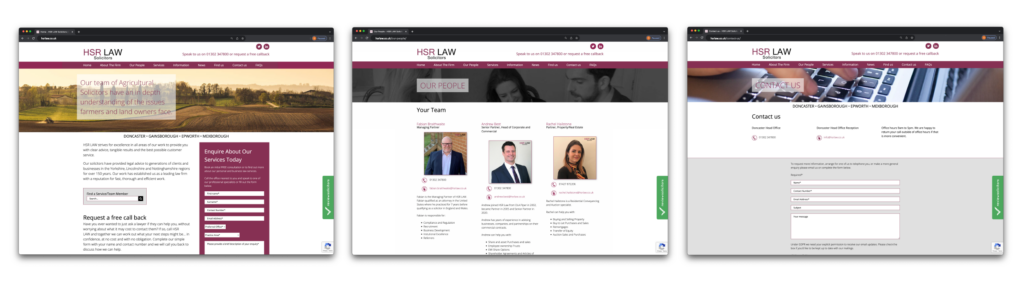
Outdated website design:

HSR Law’s old website design: lots of box-y shapes and lacking that modern spark. Call-to-actions aren’t clear, the weight of heading text overlaying images is weak and there’s a heavy lean toward an old grey look.

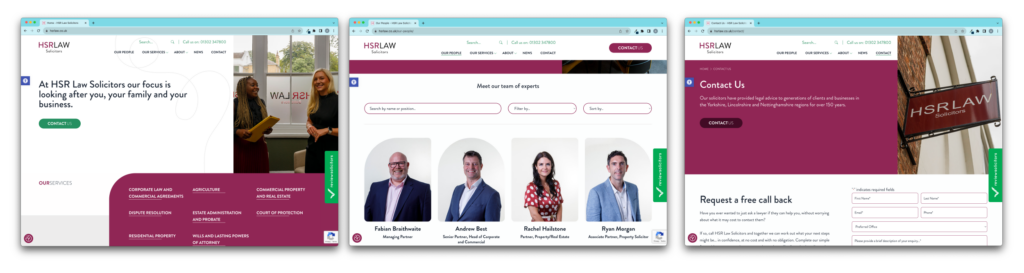
Modern website design:

HSR Law’s new website design: fun new shapes, introducing new colours, clear call-to-action’s, nice typography and use of headings for SEO, clear navigation and a strong focus on their own imagery.

Is my website fast loading?

SlOoooooow websites are the destroyer of client hope. The creator of rage clicks.

Test your website speed using Google’s tool here. Needless to say, if your website is slow, your clients certainly won’t be in how quickly they leave your site and find a competitor with a fast loading time. Your website speed is crucial in creating a good client experience. They want to be able to navigate through your site with ease and quickly. We’re all guilty of re-loading a page again and again when it’s spinning or parts of it are loading in banner-shaped chunks in a painfully sluggish reveal. Slow website speeds contribute towards unhappy website visitors and a high bounce rate. Make sure yours is fast. If it isn’t, you need to fix the problems. If the problems are unfixable and the slow-speed is deeper routed through poor and outdated coding, you may need to consider a new website.

Is my website menu easy to navigate? Is it easy to click through and quickly find what I want?

How many clicks does your client have to go through from opening your menu to getting to where they want? Your navigation menu must be clear and easy to follow. You must have a search bar function so that people can type in keywords and find things that way, but you must also have a clear hierarchy of services. Your menu is so important as this is where clients find all the information they need to instruct you. Ensuring that this menu is also responsive on mobile and just as clear/easy to follow on mobile devices is absolutely essential.

One way to check that your menu structure is clear and simple is to use the following example as a template:

E.g.

Our Services
Parent page: Residential Property (website.co.uk/our-services/residential-property)
Children page: Remortgaging (website.co.uk/our-services/residential-property/remortgaging)

A child page sits under a parent page, and a parent page sits under a main overarching page structure. Does your website follow this structure? Or do you have pages everywhere with no structure to it? See below an example of a website’s structure:

Is the mobile version of my site responsive?

If you’re on a desktop computer right now, load up your website and drag the edge of your browser inwards to see how responsive your website is. Alternatively, get it up on your phone and have a look. Does your menu work as well? Are there certain images that don’t look right or any call-to-actions that overlap your click-to-call buttons? It’s important that your website is user-friendly for desktop and mobile users, because you simply don’t know who is visiting on what device. So, we need to cater for everyone. It’s all good if your website is amazing for desktop-users, but if your Google Analytics shows 74% of your website visitors are mobile users, and you haven’t focused on optimising your site for mobile, it’s not going to work.

This is also a really important metric that Google takes into account when considering the optimisation score of your website and how well optimised it is for search engines and your users.

Does my website use the tone of voice of lawyers or clients?

This is a really tough one. It’s hard to wear the hat of your client when updating your website or adding new content to it. You tend to find yourself using language such as litigation and dispute resolution in the same page without explaining it’s essentially the same thing with minor differences; or contingency fee agreement and damages based agreement work rather than no win no fee.

Does your client know what this means?

Are you speaking to them in a language they understand, or a language that you as a legal professional understand?

I know it’s not always possible to put everything in the language of your clients. Some terminology is just complex by nature. However, your tone of voice should be approachable and friendly, whilst still reflecting the values of your brand. It’s a tricky balance, but with the right help, is definitely achievable.

E.g. You want to get a client to contact you. Which sounds better?

  • If you are looking to instruct a solicitor, contact us today.
  • Looking for a law firm to help you? We’d love to chat.

Option 2 is approachable and less intimidating, but not so informal to the point it hurts your professional brand image. Make sure your tone of voice is right and consistent throughout your entire website. This must also match up with your tone of voice across social media.

Is my site optimised for search engines and SEO friendly?

And last but not least, is your website optimised for search engines and SEO friendly? And most importantly, how do you as a law firm know if your website isn’t SEO friendly, without input from an agency?

Here’s a checklist:

  1. Is your site fast? Test your website speed using Google’s tool here.
  2. Is your site responsive on mobile and tablets?
  3. Are your pages populated with H1, H2, H3 titles?
  4. Do you have internal and external links throughout your website pages?
  5. Do you have an SEO checker on your site such as a Yoast SEO plug-in that shows you what your meta description and SEO title are? (This is very important because your meta description and SEO title determines how you are found on Google).
  6. Are the images on your website optimised for web rather than huge in size? We recommend images being less than 1MB. Anything over can cause serious lag.
  7. What does GTmetrix say about your website? Are you ranking Band A or Band F? GTmetrix tells you how your website performs, why it’s slow, and how to optimise it.

To conclude…

Getting a new website is a big investment. We understand that entirely; hence why we’re here to help you recognise the signs before delving into the world of new websites.

If after reading this article you’re realising your law firm’s website doesn’t comply with the essential audit checklist I’ve provided above, you may want to have a chat with us.

Case Studies

We’ve designed websites for Goodman Ray, HSR Law SolicitorsEdwards Duthie Shamash SolicitorsTV Edwards SolicitorsA&N Care Solicitors and more still in the pipeline. We’ve watched our clients reap the rewards of their new sites because we don’t just focus on creating compelling website designs, we focus on creating a system that alleviates your fee-earners’ time. Just one example being our intelligent automations that dynamically take information from your website enquiry forms, then populate them directly into your Practice & Case Management System (PCMS). With this technology we also digitise conveyancing quotes, Wills questionnaires and much more, all linked directly to your PCMS. 

Accesspoint Innovators Forum
Digital Marketing
8 min read

Q&A with our Digital Marketing Lead, Olivia, and the SEO results for HSR Law Solicitors

Overview

Keywords, impressions and clicks, oh my!

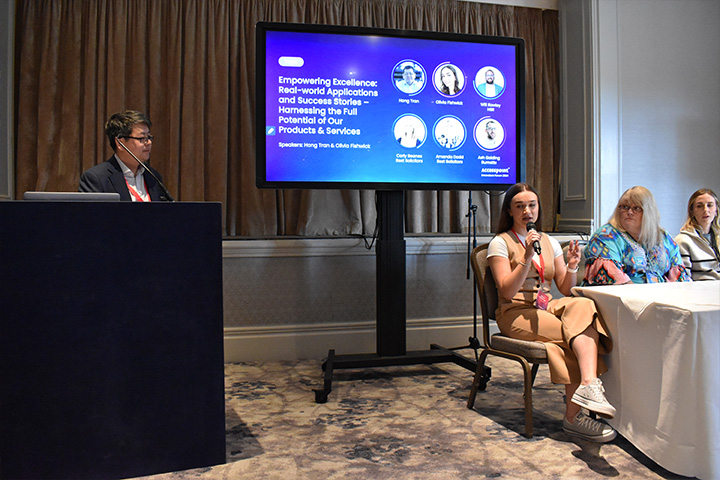
At this year’s Accesspoint Innovators Forum, we hosted our popular fire-side chat with clients from Best Solicitors, Burnetts and HSR Law Solicitors. Unfortunately due to unforeseen circumstances, Will Rowley (Practice Manager at HSR Law) couldn’t attend and so we placed Olivia on the panel to talk through the work she and Will have been doing together and the latest results from the new landing pages.

Original objectives were quite simple: heavy focus on original imagery, not stock imagery. Improve and modernise the brand across the website and subsequently use this new branding to establish a strong social media presence with the strategy of driving all traffic back to the website. HSR also wanted to improve web enquiry forms to seamlessly link client submissions directly to their PCMS. We did all this through the launch and then with the digital marketing and SEO work we do, this allowed us to work through the objectives of a better social strategy and an increase of website traffic.

So within a month of launch the google impressions increased by 4000. Just to put into perspective, an impression is when somebody sees you on the Google Search Results Page (SERP). This isn’t a click. It’s a reflection of visibility and how often you are seen across Google. Contact form completions increased by 38% and we saw an 164% increase in organic users. Just to put this into perspective because I know percentages can sometimes be a bit ambiguous: In the 3 month period of June – August last year, HSR’s website generated 94,000 organic google impressions. In that same period this year, that hit 194,000. That’s a 100,000 increase. It’s massive what the new site and SEO work has done for them.

When HSR instructed us to create a new site with them last year and also signed up for an SEO and Digital Marketing contract, the first thing I said to Will is that your website is quite small and has so many opportunities to be bigger and increase visibility: more pages = more indexability on Google.

There wasn’t a lot of content, bar landing pages for the main services such as Residential, Probate, Agriculture, Commercial; with a bullet-pointed list of sub-services. I said to Will the first thing we need to do is set up monthly meetings and identify the different departments to target and expand on the site. In February after Wills & Probate focus, we focused on Residential. We went from 1 residential page on the site to 1 parent and 12 children pages for all the sub-services, and then worked on FAQs and adding relevant accreditations such as CQS to the pages. We now have 8 number 1 positions on Google for residential property key-terms and 13 in the top 3. Some of these being auction solicitors, buy-to-let solicitors, right-to-buy, new build, transfer of equity – you can see how much visibility on google we’ve achieved from simply focusing on expanding content and optimising it for the search engine. Without those pages, we’d be missing out on all those keyword opportunities. And Will said in our last call how ridiculously busy the online enquiries are for residential now, which in turn contributed toward the decision in the conveyancing tool.

Firstly, it needs to be modern. Does it look like it belongs in 2024? And is your imagery strong? People do shop with their eyes and the first impression when they land on your website is absolutely vital.

You also need to check if your website is quick. You can test it on Google’s Speed Test. Because a slow website infuriates customers and all they’ll do is get rage-clicks, feel annoyed and consequently leave your site; seeking out a competitor. We want to keep your customers happy and provide them with a good experience which encourages them to stay. This leads me into the navigation: can you find what you’re looking for on your site? The menu needs to be simple and easy to navigate through, or again, you’ll see a high bounce rate and lack of engagement.

Lastly, your website needs to have consistent call-to-actions (CTAs). We like to design our CTAs in a different colour (usually a secondary colour) so that it stands out against the primary colour palette used across the website branding. Click-to-call and bespoke contact forms should be strategically placed around your site so that visitors can easily convert at any point in their journey. This for me is the foundation of a great website.

In terms of capitalising off it, our dev team then have the skills to create cool integrations such as web enquiries seamlessly landing in your PCMS as a lead, and more. We also create all our websites bespoke and custom-built, using WordPress, so that it removes the costly intervention of third-party agencies who create the back-end of their websites so that you have to pay every time you want something changing. We remove all of that. WordPress is flexible and easy to use, and you’ll be able to figure it out with no cost involved.

Digital Marketing
13 min read

The good, the bad and the ugly of Google Reviews: how to deal with negative online reviews

Overview

Don’t you just love that warm fuzzy feeling you get when a client makes the effort to go online and leave a shining 5* Google review of your service, how you acted and the lengths you went to when instructed? It’s a very rewarding feeling. Not just for you, but also for your company’s online reputation: the rating out of 5 increases, your recent review is stamped with five gold stars of approval. And did you know 88% of people check reviews here before instructing a firm?

Google Reviews is the most common site looked at, with 88% of people checking for reviews here. Just over half look at Facebook and around a third check ReviewSolicitors or Trustpilot. The main reasons cited for doing this is to identify areas for improvement and identify good performance.

sra.org.uk

Google Reviews act as a hub for current clients and past clients to share their experience with you (publicly) to inform other potential clients browsing the internet for a solicitor just how good (or bad) they believe you are. They’re an excellent golden nugget of user-generated content that can be repurposed in the following ways:

  • Add to your website under a testimonials tab, creating an internal link to the department mentioned in the review and the solicitor (if applicable).
  • Add the review to the specific solicitor’s online profile to strengthen their profile and show to potential clients exactly what past clients think. In our 2023 and 2024 bespoke client website reports, the ‘Our People’ pages of a law firm website are the second most viewed and most popular pages across the entire site. Make sure your profile is optimised to really back up what you specialise in!
  • Turn the review into social media posts linking to the solicitor’s LinkedIn profile and increasing your visibility and credibility across socials.

You know how good you are at what you do, but nothing will truly communicate your perceived worth with as much impact as the paying customer’s feedback. Encourage clients to leave Google reviews by linking them to your Google My Business page once you’ve closed their case. You can also add this step to the bottom of closing letters to create a less admin-heavy task in collating reviews.

Consumers rely heavily on Google reviews to make informed purchasing decisions, and it’s a critical step in the decision-making process for our online clients. So the more good reviews you receive, the better your online reputation and the more sway you have over clients shopping around online. But what happens when you get a bad review?

Many law firms I speak to fear that replying to unhappy customers online opens a dialogue which could get ugly. To clarify, once a customer leaves a Google review and you reply, they cannot respond again.

The bad Google reviews are just as important as the good. That’s because of a phrase I love to talk about called social listening. Social listening is basically where people float around your social media or your online reviews, looking and observing, but never actually engaging up until the point where they decide to instruct you based off their online observations. These are the people you’re appealing to when dealing with a negative review.

Here’s how you need to deal with your negative reviews. You probably won’t like the idea of it at initial glance, but at the end of this article, if you understand why it’s so important to do what I’ve detailed below, then this post has served its purpose!

If you don’t reply to a negative review, you’ve lost out on a huge chance to show any social listeners that you care, that you take feedback seriously and that you wish to sort the matter.

Alternatively, it’s a chance to put fake reviewers in their place and politely inform them that you have no record of them on your database or you have never had a client of their name. This shows to any social listeners you believe this review isn’t real without accusing the reviewer that they are fake. And people aren’t stupid: every single business out there will have had an unhappy customer. It’s a part of being a business. And to try and erase that is to erase transparency which is what Google sets out to do in the first place with its review system. It’s a shame when you receive fake reviews where people can attack you online in attempt to damage your reputation, but you can’t allow this to define who you are and what you do.

The social listeners and the potential future customers reading your reviews are smart enough to draw their own conclusion on the matter. But that’s why it is SO important to reply. That’s your opportunity to fight your corner, so that to any prospects reading the review, you’ve lay out your response right there: not just for the reviewer, but also for those future clients who may be looking.

These are the people championing your business. It’s so easy to get sucked into the black hole of negativity when trying to sort a bad online review, but a simple Thank you so much [insert name]! will suffice when acknowledging clients that have taken time to leave a nice review for you.

Many of our clients have been approached by ‘online reputation management’ companies that claim they can remove your Google reviews, which is a rather tempting invitation when you’re biting your nails down to the cuticle over a review slandering the firm. But did you know it’s physically impossible to remove specific reviews unless they violate Google’s policies? These companies forget to inform you in their initial pitch that to remove said negative review, they purge your entire Google listing so you can start again on a blank canvas. This consequently does more damage than good. You go from having a mix of (majority) 5 star and (some) 3 and 1 star reviews, to none at all. Your trust is gone, future clients will be sceptical as to why you have no reviews, and to omit the bad, you’re erasing all the good.

It’s easy to recognise what kind of reviews violate google’s policies which you can see here. For example:

Review example 1

[Insert name] is ugly and I really didn’t like them. Stay away from [insert name]!!!

This review would violate harassment, offensive content, and possibly even fake engagement as it has no relation to an experience with the business.

Review example 2

*A customer leaves a 1-star review with no reasoning why.

This review would violate fake engagement because it has no comment about the business or the experience and so provides no value to prospects.

This can be really difficult to succeed in for law firms. For example, if a fake client leaves a review listing their awful experience with you, you cannot prove to Google that this is a fake review or misinformation. It’s a case of he-said-she-said and it’s so frustrating for law firms especially when it’s not a truthful review.

There is another more extreme step you can take after reporting, which is appealing a decision Google has made. If Google decides a review doesn’t violate a policy, you can appeal this by filling in an online form to Google, telling them why you believe a review violates their policies. However, this also isn’t guaranteed. We’ve seen cases of firms going through the entire appeal process, just for Google to stamp a big fat cross over it. What we can guarantee though is your consistency in responding to reviews and taking charge of managing your firm’s online reputation by replying to the good, the bad and the ugly side of Google reviews. You never know who’s watching. You never know how impactful your response could be in the decision-making process of any social listeners loitering on your digital profiles.

  • Encourage google reviews by sending the link to clients once a case is closed, or adding the link to closing letters.
  • Don’t ignore ANYONE. Thank your cheerleaders and then fight your corner in the politest way to anyone trying to damage your online reputation. Try and fix it. Reach out to the client. Openly leave your contact details on the review to show that you want to sort this issue.
  • Report any reviews that violate guidelines. If members of your staff are being personally attacked or a 1-star review is left with no additional comments, these should be easily removed under grounds of harassment or lack of information.
  • Treat your reviews like a thousand people are judging you. Always reply politely, but in a way that gets your point across to the reviewer and the social listener that you believe the review is either fake, or you are deeply sorry for their bad experience and wish to resolve it.

You can manage your online reputation with honesty and transparency. Replying to reviews shows you care, ignoring them can communicate you’re not bothered, and trying to get them removed is a whole different level. Trust in your future clients to make their own judgement about you based off your online reviews, but definitely try and help them in that judgement along the way by responding to your Google reviews: the good, the bad and the ugly!

If you want to discuss digital marketing or anything discussed in this blog, email me at olivia.fishwick@theaccesspoint.ltd.

Testimonials

Don’t just take our word for it...

Working with Nesar has been a positive experience for our website. His technical expertise, proactive approach and attention to detail ensure that our site runs smoothly at all times. He is always quick to resolve issues, implement improvements, and offer practical solutions that enhance user experience. Nesar is a pleasure to work with, and I am impressed with his communication and client service skills.

Hayley Leslie, TV Edwards

Working with Accesspoint’s website team was reassuring and easy. They kept us updated with everything that was going on from start to finish. We’re very happy with the new website. It’s clean, refreshing, and provides a great user experience with its fast speed and easy navigation.

William Rowley, HSR Law Solicitors

We’ve been really impressed with Accesspoint and Rich’s SEO support. Rich is extremely proactive in suggesting and carrying out work that genuinely helps improve our rankings, and he’s always there whenever we need advice or support. We’ve already seen great results from the work they’ve done, and it’s reassuring to know our SEO is in such capable hands. Highly recommended.

Molly Thornton, Thornton Jones Solicitors

I’ve really enjoyed working with Rich and have seen first-hand the positive impact he has had on our website. His in-depth knowledge of SEO is inspiring, and I’ve learned so much from him through our email exchanges alone! Anyone who works with Rich will gain valuable knowledge that they can then carry forward. Thank you Rich for all your hard work and support.

Paaris Kazmi, GT Stewart Solicitors

Working with Accesspoint has been an absolute pleasure. Their passion for what they do and supporting their clients is clear in every interaction. Scott, Olivia, Rich, and others are consistently approachable, and willing to go the extra mile. Our project with them was complex and highly bespoke, yet they rose to the challenge effortlessly. Thanks to them, our website and brand has seen a significant increase in visibility, engagement, and traction.

Brett Shaw, Chronicle Law

Rich has been absolutely fantastic in helping us improve our SEO efforts. He has always been proactive in optimising our pages and ensuring they perform the way we need them to. He has been great at offering valuable guidance on how to strengthen our rankings and his monthly reports have been elaborate and really useful. I’ve very rarely had to reach out to Rich. He has always actively suggested improvements and identified opportunities to ensure we stay on track.

Paaris Kazmi, GT Stewart Solicitors

The warmth and generosity of the Accesspoint team is amazing – you are a lovely bunch of people and a real pleasure to work with.

Rebecca Faulkner, Enoch Evans

Our website looks really fantastic! Well done to all of you!

We are so happy with all the social media on Goodman Ray! It’s so exciting every time I see something on there. Olivia and Emma are doing a great job and make everything so easy!

Louise Payne, Practice Manager at Goodman Ray Solicitors

I love working with Accesspoint because they are always available to help with any query big or small and have the expertise to ensure the issue is sorted.

Clifton Ingram Solicitors

What we love most about Accesspoint are the people.

Tracey Thorpe, Hunt & Coombs

Accesspoint have been so incredibly supportive in achieving desired objectives – including creation of platforms, website design and lead generation. Big thanks in particular to Olivia Fishwick, Scott Brown and Richard Roebuck who continue to help make a difference for the business.

Thushara Polpitiye, Founder and Managing Director of Astute Law

Book a demo

This field is for validation purposes and should be left unchanged.